

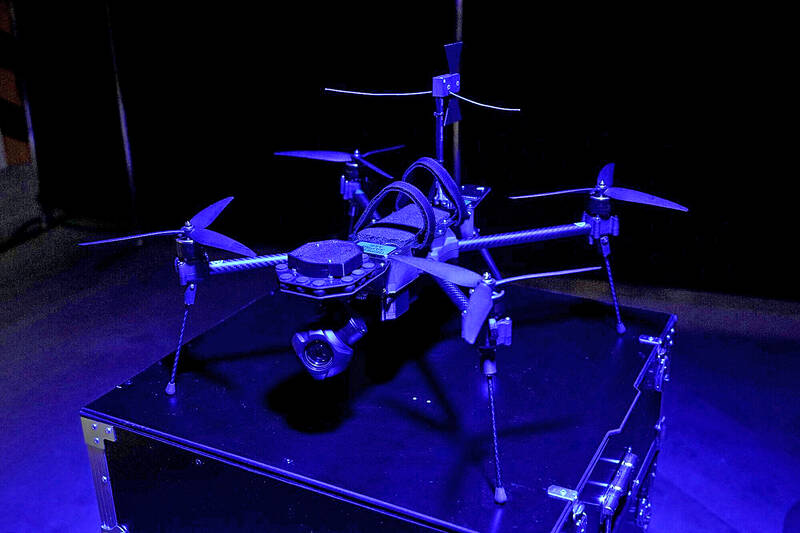
The CEO of U-Force, a Ukrainian producer of attack drones, in April flew to Tokyo with a pitch for Japanese officials and defense contractors: Build thousands of our drones to defend yourself and allies.
Days earlier, US troops had used waterborne U-Force drones to sink a ship during a secretive exercise held where the South China Sea meets the Pacific Ocean. For years, the firm’s Magura surface vessel has helped turn parts of the Black Sea into no-go zones for the Russian navy.
While the maritime geography of East Asia is very different, “the impact is extremely similar,” U-Force CEO Oleg Rogynskyy said.
…
These defense contractors are seeking to capitalize on Ukraine’s reputation as a master of drone warfare, which has helped an otherwise-outgunned Kyiv hold out for more than four years against Russia. Ukraine has also leveraged its expertise into diplomatic and defense deals in Europe and the Middle East, and Ukrainian President Volodymyr Zelenskiy in February said that Kyiv was “ready to open up our technologies” such as sea drones to Japan.
Former Japanese minister of defense Itsunori Onodera, who remains an influential lawmaker, said he welcomed the Ukrainian efforts to cooperate.
Tokyo needs equipment “that is actually demonstrating effective power,” he said.
Ukrainian defense firms such as U-Force, Skyeton and General Cherry hope to find production partners in Japan, an industrial heavyweight that this year cast off longstanding restrictions on arms exports. The Japanese military has hosted at least one previously unreported demonstration of Ukrainian drone tech from Swarmer, the firm said.
…
Japan is the best way to the Asian market,” General Cherry cofounder Stanislav Gryshyn said in Tokyo where he exhibited at a drone show, met with potential local partners and networked with Japanese government officials at an event hosted by the Ukrainian embassy.
Skyeton, which says its long-range drones could help patrol Japan’s 14,000-plus islands, also held meetings in the country last year.
Ukrainian Ambassador to the Philippines Yuliia Fediv said that Kyiv has been in discussions with Manila over drone-technology cooperation.
Any Ukrainian drones sold to the Philippines would likely be made in Japan, which has superior manufacturing expertise, two Ukrainian drone executives told Reuters.
Manila, which has been locked in a series of increasingly tense maritime confrontations with China, is already one of Japan’s main defense customers.
…
Ukrainian companies have also been pushing to secure components from friendly East Asian markets to reduce their dependence on China. Beijing produces many drone components and has placed some restrictions on their export. However, some of these parts are also made in Japan and Taiwan, which are home to many suppliers of cameras, microelectronics and other components.
The Ukrainian drone association IRON last month brought a delegation of about a dozen members to meet with Taiwanese firms in the industrial hub of Taichung.
The main aim of the gathering, the details of which Reuters is reporting for the first time, was to help Ukrainian firms to find parts suppliers, IRON chief executive Volodymyr Cherniuk said.
In some instances, the cooperation goes deeper: Elson Zhang of Jiin Ming Industry, one of the Taiwanese firms that participated, told Reuters they were working on an early-stage project with a Ukrainian company on a drone that might be sold back to Taiwan. He declined to name his partner.
Cherniuk said he plans to take several of his members to Tokyo later this year with the aim of finding Japanese production partners.
“We would be happy for our drones to protect any country from invasion,” said Cherniuk. “We know the best how it feels.”
…
Ukrainian drone makers targeting Asian markets
No pun intended
